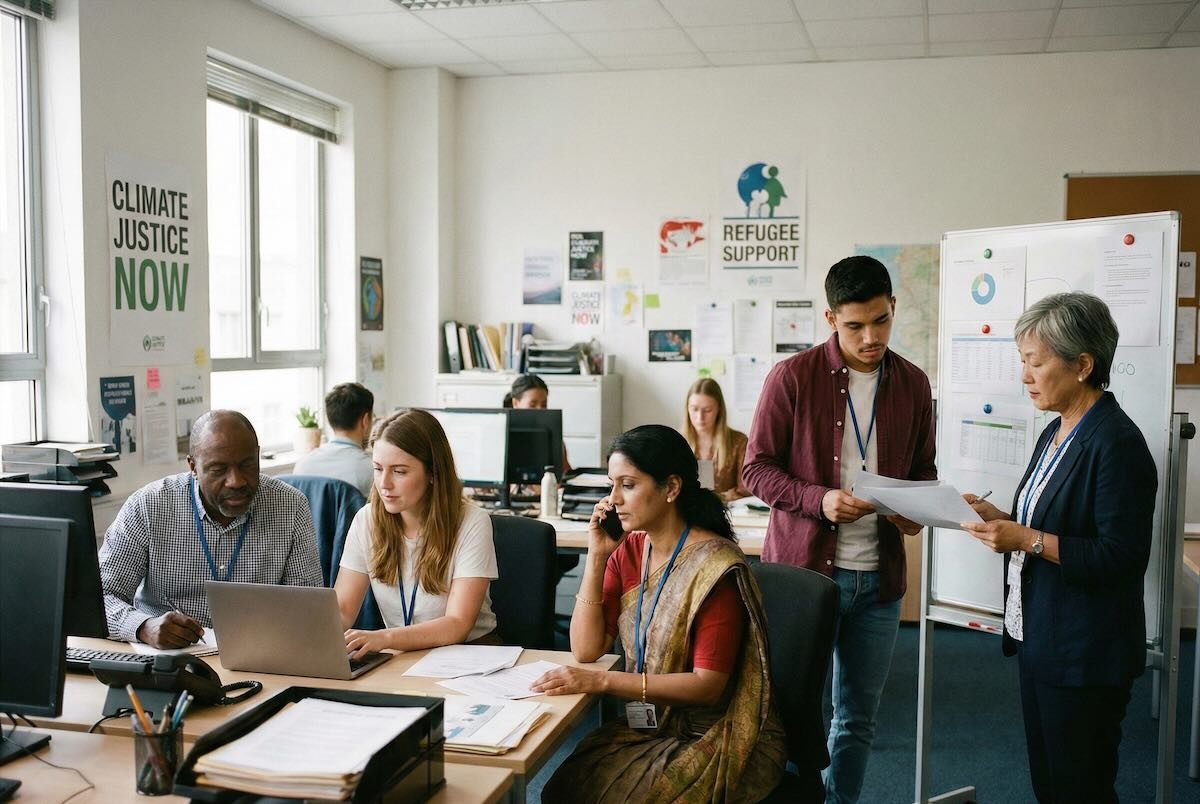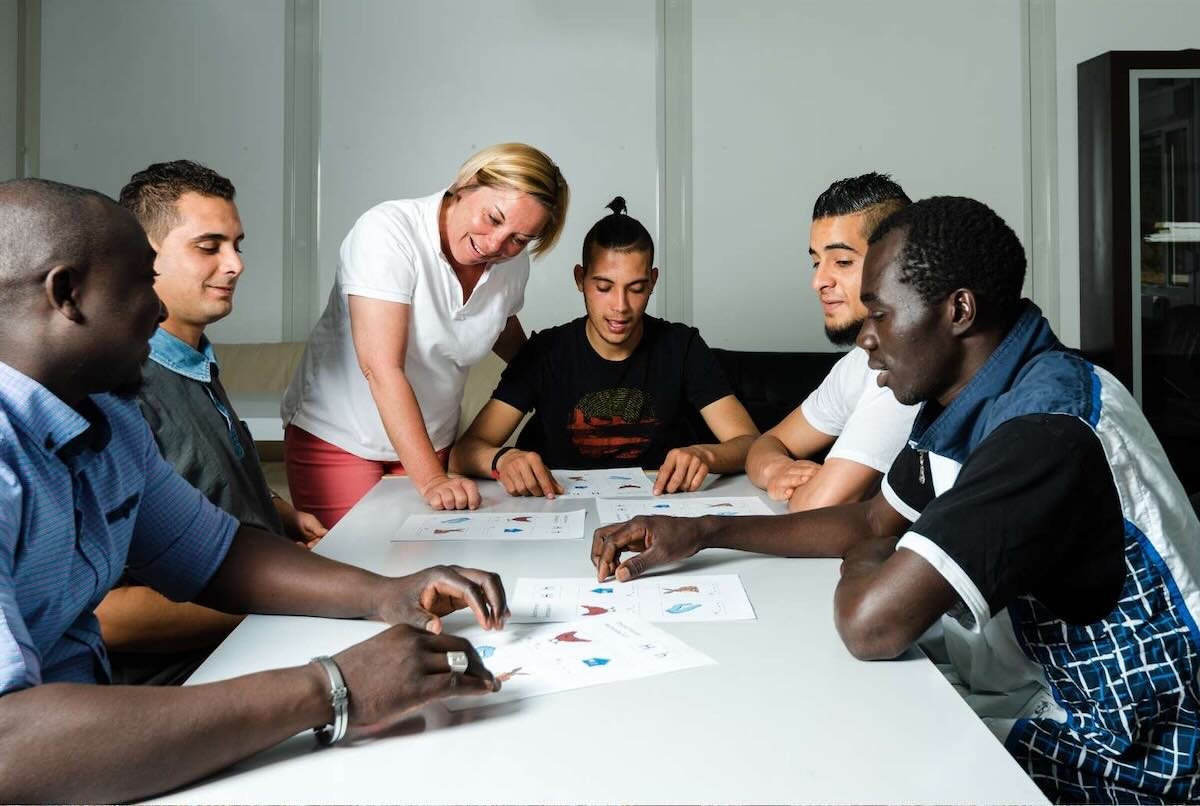

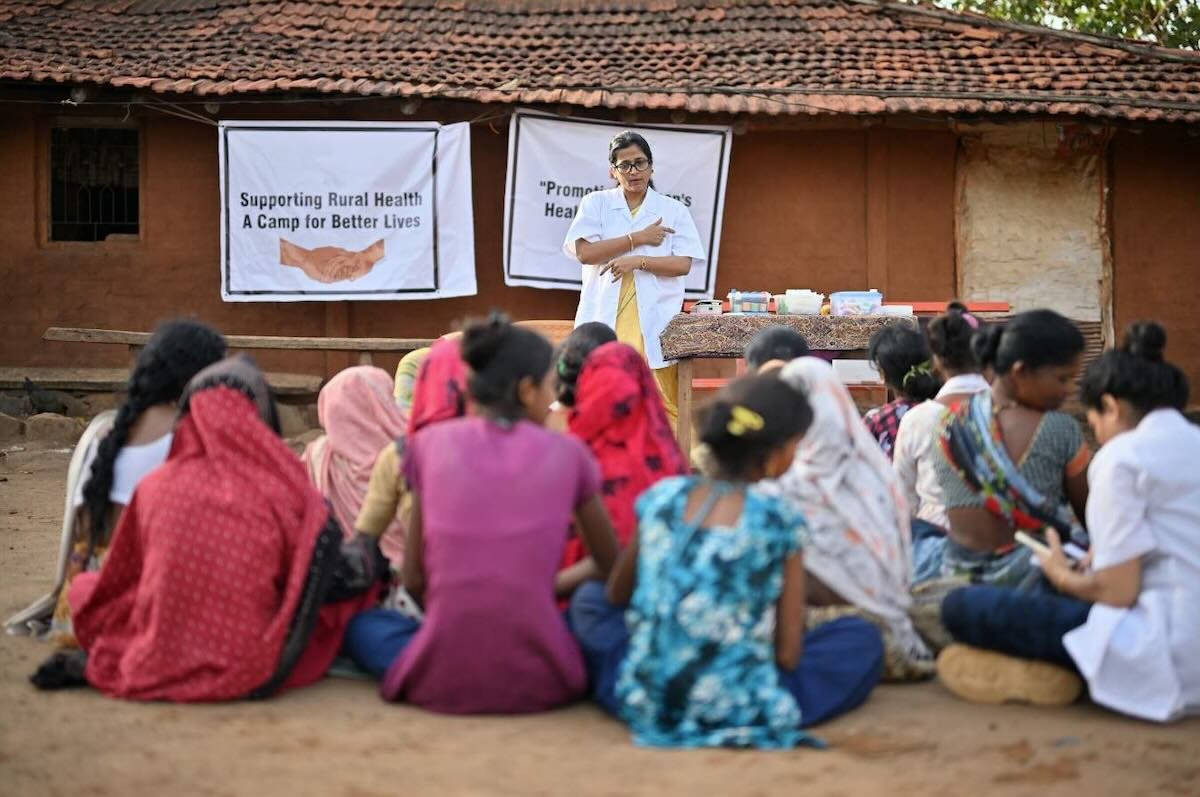
Your organization does life-changing work. You’ve got the data, the field reports, and the success stories. But when you publish a case study or launch a campaign, the response is underwhelming. Donors scroll past. Media outlets ignore your press releases. Your content disappears into the algorithmic void.
The problem isn’t your mission. It’s how you’re communicating it.
Across Asia, NGOs, UN agencies, and climate organizations lose potential supporters every day because their communications are too technical, poorly localized, or invisible to search engines. When a Thai community needs flood relief information, they shouldn’t have to wade through academic jargon. When a Jakarta-based donor searches for “urban climate solutions,” your groundbreaking project should appear on page one, not page ten.
This post walks through nine specific communications problems that limit your reach and offers practical, concrete solutions you can start using today. WorldEdits helps organizations implement these fixes through expert editing, localization, and strategic content services.
TL;DR: Quick wins you can start today
- Replace specialist terminology with plain language that speaks to general audiences
- Rewrite your homepage headline using your audience’s actual search terms
- Hire native speakers to adapt (not just translate) your content for local markets
- Create one simple infographic from your most recent impact report
Contents
1. Jargon-heavy writing repels general audiences
Technical language might impress your colleagues, but it alienates everyone else. When you write about “climate adaptation co-benefits” or “multi-stakeholder engagement frameworks,” you’re asking readers to work too hard. Most won’t bother.
General audiences (donors, volunteers, concerned citizens) need plain English. They need to understand what you do, why it matters, and how they can help within the first 30 seconds of landing on your page.
What you can do in the short term
Pick your three most-visited pages. Read them out loud. Circle every phrase that would confuse your aunt or a university freshman. Replace those phrases with conversational equivalents. “Climate adaptation co-benefits” becomes “side benefits of preparing for climate change.” “Multi-stakeholder engagement” becomes “bringing communities, government, and businesses together.”
Do this exercise in one afternoon and publish the revised pages immediately.
Strategy
Create a simple style guide. List 20–30 common jargon terms your team uses and their plain-language alternatives. Share this document with every staff member who writes or reviews content. Make “jargon audit” a standing agenda item in your editorial meetings.
Track average time-on-page and bounce rate for jargon-heavy pages. After you simplify the language, check if these metrics improve over 30 days.
Example outcome
An advocacy group might see average session duration increase and bounce rate drop after replacing specialist vocabulary with everyday language. More readers stay, scroll, and click through to donation forms.
How WorldEdits can help your organization
WorldEdits offers plain-language editing services specifically for NGOs and international agencies. Our editors read your reports, web copy, and campaign materials, then rewrite them for general audiences without losing technical accuracy. We can audit your existing content and produce a custom style guide for your team. Contact us for details.
2. Weak headlines fail SEO for climate case studies
You’ve published detailed case studies showing real impact. But when someone searches “renewable energy Philippines” or “community water projects Indonesia,” your work doesn’t show up. The problem is usually your headline and page title.
Search engines prioritize pages that match user intent. If your case study is titled “Project Sunshine Final Evaluation Report Q4 2024,” Google has no idea what it’s about. A better title: “How Solar Microgrids Brought Electricity to 12 Remote Philippine Villages.”
What you can do in the short term
Open Google Search Console or any keyword research tool (even Google’s autocomplete works). Type phrases related to your recent projects. Note what real people are searching for. Now go back to your five most recent case studies and rewrite the headlines using those search terms. Make sure your H1 tag and meta title match.
This takes about 2 hours and can dramatically improve your visibility.
Strategy
Before you write any new content, start with keyword research. Identify 3–5 search phrases your target audience actually uses. Build your headline and first paragraph around those terms. Use them naturally in subheadings too.
Create a shared spreadsheet listing your priority keywords and which pages or posts target them. Review it monthly to avoid keyword cannibalization (multiple pages competing for the same search term).
Example outcome
A climate research group might see organic search traffic to case studies increase after replacing internal project names with descriptive, keyword-rich titles.
How WorldEdits can help your organization
WorldEdits provides SEO audit and headline optimization services. We research the search terms your audiences use, then rewrite your headlines, meta descriptions, and opening paragraphs to match. We can also train your team on ongoing SEO best practices for nonprofit content. Ask us how.
3. Untranslated reports lock out local stakeholders
You publish everything in English because it’s your organization’s working language. Meanwhile, the communities you serve, local government officials, and regional media can’t access your findings. Translation isn’t optional when you work across Asia. It’s a basic access requirement.
Publishing only in English signals that local voices matter less. It limits who can cite your research, advocate using your data, or partner with you.
What you can do in the short term
Identify your three highest-impact publications from the past year. Commission professional translations into the primary languages of the regions you work in (Thai, Bahasa Indonesia, Japanese, Vietnamese, etc.). Start with executive summaries if full reports feel overwhelming.
Upload these translations to your website with clear language labels. Make them as easy to find as the English versions.
Strategy
Build translation into your content budget from the start. Every time you scope a new report or campaign, include line items for localization. Hire native-speaking translators who understand your sector, not general translation services that treat all content the same.
Track downloads and citations by language. Measure whether local media pick up stories after you provide translated materials.
Example outcome
A development agency might see local journalists reference its work more frequently after publishing reports in Thai and Bahasa Indonesia, not just English.
How WorldEdits can help your organization
WorldEdits connects you with professional translators who specialize in NGO, development, and climate content. We don’t just translate words. We localize concepts, adapt examples, and ensure cultural appropriateness. Contact us to discuss your case study and content localization needs.
4. Storytelling ignores local cultural contexts
Your campaign uses metaphors and references that work in New York or London but fall flat in Manila or Phnom Penh. You showcase individual achievement in a culture that values collective action. You use imagery that feels foreign to your target audience.
Effective storytelling respects cultural context. What motivates donors in Japan differs from what resonates in Indonesia. A one-size-fits-all approach wastes your effort and budget.
What you can do in the short term
Review your most recent campaign materials. Ask yourself: Does this reflect how people in [target region] actually talk about these issues? Does the imagery show local settings and faces?
Find 2–3 communications staff or partners from your target regions. Pay them for a one-hour consultation. Ask them to review your materials and flag anything that feels culturally off. Act on their feedback immediately.
Strategy
Build regional advisory groups into your communications workflow. Before launching any campaign, run materials past representatives from each target market. Give them permission to propose substantial changes, not just minor tweaks.
Create region-specific variants of major campaigns. This costs more upfront but delivers better results than broadcasting generic content everywhere.
Example outcome
A gender equality campaign might perform better in Thailand after advisors suggest emphasizing community benefit over individual empowerment, aligning with local cultural values.
How WorldEdits can help your organization
WorldEdits offers cultural consulting and localization services. Our network includes communications professionals from across Asia who can review your content, flag cultural disconnects, and help you adapt messaging for specific markets. Get in touch for info.
5. Infographics missing or low-quality
You’ve got compelling data. It’s buried in 40-page PDF reports that nobody reads. Meanwhile, organizations with weaker research but stronger visuals dominate social media and media coverage.
People process visuals 60,000 times faster than text. A well-designed infographic turns your research into shareable, understandable content that extends your reach exponentially.
What you can do in the short term
Open your most recent impact report. Find 3–5 data points that genuinely surprised or excited you when you first saw them. Use a free tool like Canva to create a simple one-page infographic highlighting those findings. Don’t try to include everything. Just the most compelling numbers.
Share it on social media with a link back to the full report. Watch it get more engagement than the PDF ever did.

Strategy
Hire a designer or train a staff member in data visualization. For every major publication, create at least one shareable infographic. Make these available in multiple formats: social media posts, standalone downloads, and embedded web graphics.
Test what resonates. Track shares, saves, and clicks. Double down on formats and topics that perform well.
Example outcome
A public health NGO might see its social media reach expand after creating simple, visually appealing graphics from survey data that previously only existed in text tables.
How WorldEdits can help your organization
WorldEdits offers infographic design and data visualization services. We work with your research team to identify the most compelling findings, then create publication-ready graphics optimized for web, social, and print. We can coordinate this for you.
6. Social media doesn’t resonate with readers
Your social posts sound like press releases. They’re formal, distant, and packed with hashtags. Nobody comments. Nobody shares. You’re broadcasting into silence. Despite this, trends show that 97% of NGOs use Facebook, 85% use Twitter/X, 63% use LinkedIn, and 61% use Instagram.
Social media rewards conversational, human communication. Your audience wants to hear from people, not institutions. They want to feel something: inspired, angry, hopeful, connected.
What you can do in the short term
Look at your last 10 social media posts. How many use “we” statements? How many ask questions? How many tell a specific person’s story?
Rewrite your social content formula. Start with a human moment or direct question. Share one concrete detail. End with an invitation to engage (“What would you do in their situation?”). Cut your hashtags in half.
Post one piece of content using this new approach and compare the engagement to your usual posts.
Strategy
Create social media guidelines that emphasize conversational tone. Give your social team permission to sound human, even informal. Share photos and stories from the field, not just logos and statistics.
Engage actively. When someone comments, respond personally and quickly. Social media is a conversation, not a bulletin board.
Track engagement rate, not just follower count. Meaningful interactions matter more than vanity metrics.
Example outcome
An environmental organization might see comments and shares increase after shifting from formal announcements to conversational posts featuring field staff and community members.
How WorldEdits can help your organization
WorldEdits provides social media content strategy and copywriting services. We can audit your current approach, develop platform-specific guidelines, and create a bank of engaging posts that sound human while advancing your mission. Reach out for details.
7. Overly technical data without contextualization
Your reports present sophisticated analysis. They’re full of regression models, confidence intervals, and statistical significance. Your readers have no idea what any of it means for actual people.
Data needs context. Raw numbers and complex methodology don’t move people. Stories about what those numbers represent do.
What you can do in the short term
Find your most recent data-heavy publication. Pick three findings. For each one, write two sentences: What does this mean in plain English? What does it mean for someone’s daily life?
Example: Instead of “Survey results show p < 0.05 correlation between intervention and outcome,” write “Children in villages with clean water projects missed 40% fewer school days due to illness. That’s roughly two more months of education per year.”
Add these explanatory sentences directly into your next report or create a separate “What This Means” summary.
Strategy
Train your research staff in data storytelling, which can improve communication with stakeholders by 64% according to one survey. Require every statistical finding to include a plain-language interpretation and a concrete example. Make “So what?” a mandatory question in your internal review process.
Create different versions of technical reports: one for academic audiences, one for policymakers, one for general audiences. Don’t try to serve all readers with one document.
Example outcome
A research institute might see more media coverage after providing journalists with pre-written plain-language summaries alongside technical papers.
How WorldEdits can help your organization
WorldEdits specializes in translating technical content for general audiences. Our editors work with your research team to clarify methodology, contextualize findings, and create accessible summaries without sacrificing accuracy. Send us a sample for a free assessment.
8. Case studies buried on agency websites
You’ve published 50 case studies over five years. They’re organized by project code or upload date. Visitors to your website can’t find them, and Google doesn’t rank them because they’re not optimized.
Your best evidence of impact is functionally invisible.
What you can do in the short term
Create a dedicated case studies landing page. List all your case studies with clear, descriptive titles. Add 2–3 sentence summaries so visitors can quickly find what matters to them. Include filters by region, topic, or year.
Add this page to your main navigation menu. Make it easy to find.
Strategy
Treat case studies like content marketing, not just internal documentation. Give each one a unique, SEO-optimized URL. Use descriptive titles. Add relevant tags and categories. Create an internal linking strategy so related case studies point to each other.
Promote new case studies through email, social media, and outreach to relevant journalists or bloggers. Don’t just publish and forget.
Example outcome
A conservation group might see case study page views increase after reorganizing its website to feature success stories prominently and optimize them for search.
How WorldEdits can help your organization
WorldEdits offers content strategy and website optimization services. We can audit your site structure, reorganize your case studies for better discoverability, and optimize each one for search engines. We also provide ongoing content promotion strategies.
9. Branding inconsistent across channels
Your website uses one logo. Your social media uses another. Your reports have three different header styles. Your email signature doesn’t match anything. This inconsistency makes you look unprofessional and confuses your audience about who you are.
Strong branding builds recognition and trust. When people see your content anywhere, they should immediately know it’s you.
What you can do in the short term
Do a brand audit. Visit your website, social profiles, recent reports, and email templates. Screenshot everything. Line them up side by side. Note every inconsistency: colors, fonts, logos, tone.
Pick one version as your standard (usually your most recent professional design). Update everything else to match over the next two weeks. Start with high-visibility items like your website homepage and social profile images.
Strategy
Create a brand style guide that documents your logos, color palette, fonts, and tone of voice. Make it a short, practical document (5–10 pages) that any staff member or contractor can reference. Include examples of good and bad applications.
Appoint one person as brand guardian. They review all external-facing materials before publication to ensure consistency.
Example outcome
A humanitarian organization might see increased social media recognition and fewer “Who are you?” questions after standardizing visual identity across all platforms.
How WorldEdits can help your organization
WorldEdits provides brand consistency services, including style guide creation, content audits, and template design. We can review all your channels, document inconsistencies, and create a unified visual and verbal identity system. We’ll be happy to give you a free assessment – ask us.
Frequently asked questions
Q: How much should an NGO budget for professional editing and localization?
A: Budget 5–10% of your communications spend for editing and localization. For a $100,000 annual communications budget, that’s $5,000–$10,000. This covers professional editing for major reports, translation of materials into 2–3 languages, and basic design work. Adjust based on how many languages and regions you serve.
Q: Can’t we just use Google Translate instead of professional translation services?
A: Google Translate works for getting the gist of text, not for publishing. It makes grammatical errors, misses cultural nuance, and often produces unintentionally funny or offensive results. Professional translators who specialize in your sector cost more upfront but protect your reputation and ensure your message actually lands with local audiences.
Q: How do I know if my content is too technical?
A: Read it out loud to someone outside your field. If they ask you to explain more than two terms or concepts, it’s too technical. Another test: paste your text into a readability checker. Aim for grade 8–10 reading level for general audiences.
Q: What’s the difference between translation and localization?
A: Translation converts words from one language to another. Localization adapts content for cultural context, including adjusting examples, metaphors, visuals, and concepts that don’t translate directly. Localization costs more but delivers content that feels natural to local audiences.
Q: How long does it take to see results from SEO optimization?
A: Expect 3–6 months to see meaningful organic search improvements. Quick wins (fixing broken headlines, adding missing alt text) can show results in 4–8 weeks. SEO is a long-term strategy, not a quick fix.
Take the next step
You don’t have to fix all nine problems at once. Pick two that feel most urgent for your organization. Start with the quick wins described above. Track what improves.
If you need expert help, WorldEdits offers editing, localization, design, and content strategy services specifically for NGOs, UN agencies, and climate organizations working across Asia. We understand your constraints, your audiences, and your mission.
Schedule a free 30-minute consultation by Zoom, Teams, etc. to discuss your specific communications challenges.
Or if you just need writing or editing for your NGO or organization’s case studies and other content, we can do it all for you. Please get in touch.